

ARY RUSSELL: Welcome to New York. This is not your first time here, right?
SIENNA SPIRO: No. I mean, other than London, New York is my favorite city in the world.
RUSSELL: Really?
SPIRO: Yeah, it’s the last real city with magic where you can be spontaneous and inspired. Also the jazz music here is incredible. Whenever I have a free moment, I’m always at a jazz club.
RUSSELL: I want to start back at the beginning. Even though you’re so young, you have such a rich musical history. What is the first memory that made you realize that you wanted to pursue this as a career?
SPIRO: I’ve been singing since I could talk, like doing nursery rhymes. When I was super young, Frank Sinatra, Nina [Simone], Etta James, Dinah Washington, Barbara Streisand, Al Green—all the greats were played in my house. That was my pop music, and I used to try and emulate the way they would sing.
RUSSELL: Power houses.
SPIRO: Then I wrote my first song when I was ten. I was a very emotional child. I’m very overwhelmed by things. I remember being 16 and we had GCSEs in school and I knew I didn’t want to stop.
RUSSELL: You’re like, “That’s my life.”
SPIRO: I went behind everyone’s back. I found a music college, applied to it, kind of didn’t get in. My parents were like, “What have you done?” I was writing them every day, and then I got in. I kind of gave you my whole story. [Laughs]
RUSSELL: I love it.
SPIRO: I ended up finding my management from posting one video. I went to music college, dropped out at 16 for honestly a bad reason. So I’m glad it worked out.
RUSSELL: I read you dropped out at 16 and I was like, “How were her parents reacting?”
SPIRO: They didn’t have a choice.
RUSSELL: Did that instill a level of confidence in you or was it just the pressure to succeed because you’d made this crazy decision?
SPIRO: A bit of both. I’m very stubborn and headstrong. When I want to do something, I would just try everything in my power to do it. I was dropping out for quite a foolish reason that, looking back, probably wasn’t the right thing to do.
RUSSELL: Why’d you drop out?
SPIRO: Don’t even, girl. [Laughs] It was like false promises, older producer man.
RUSSELL: It’s almost like a rite of passage for a young, rising star.
SPIRO: We’re good now. Everything’s okay. Thank god.
RUSSELL: You’re here.
SPIRO: It was a blessing in disguise. As insecure as I’ve been my whole life, I must have had this confidence in myself because I never even considered doing anything else. This is all I ever want to do. I’ve only recently been reflective and understood how lucky I am that it’s actually happened this way because this is not normal.
RUSSELL: I’m very curious about the trajectories and the mindsets of artists that are from the UK, because in comparison to America, the culture we will instill in kids is “You can be anything. You can be the President of the United States.” I’ve heard from British people—
SPIRO: We don’t have that. It’s like, “Get to work.”
RUSSELL: But then there’s people like you who go against the grain and lean more into the American mindset of , “I’ve got to take a risk. I want to be a star.”
SPIRO: Right.
RUSSELL: I wanted to talk about your looks. I see the sixties vibe. Who or what’s been on the mood board for you as an artist and specifically for this tour?
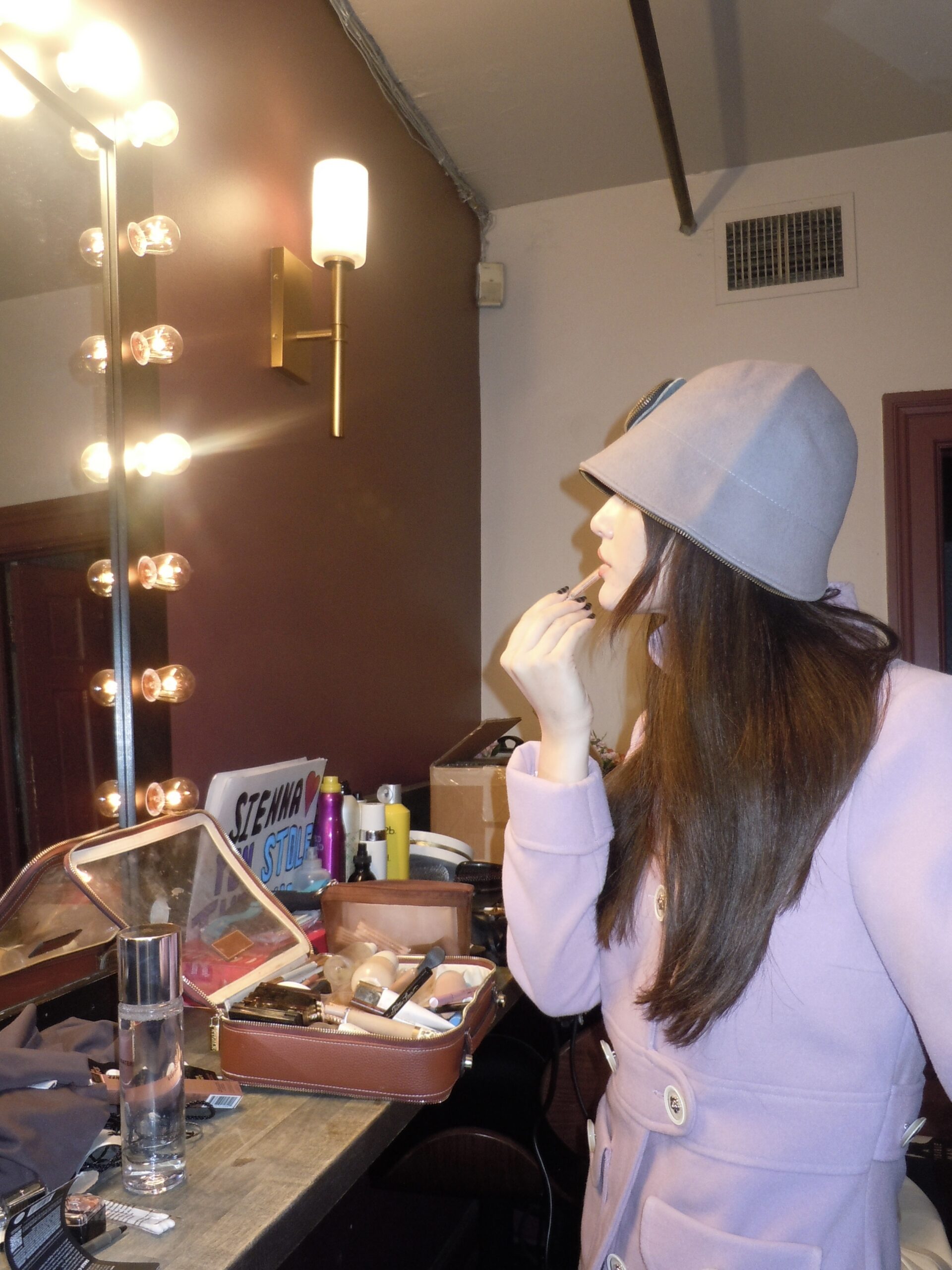
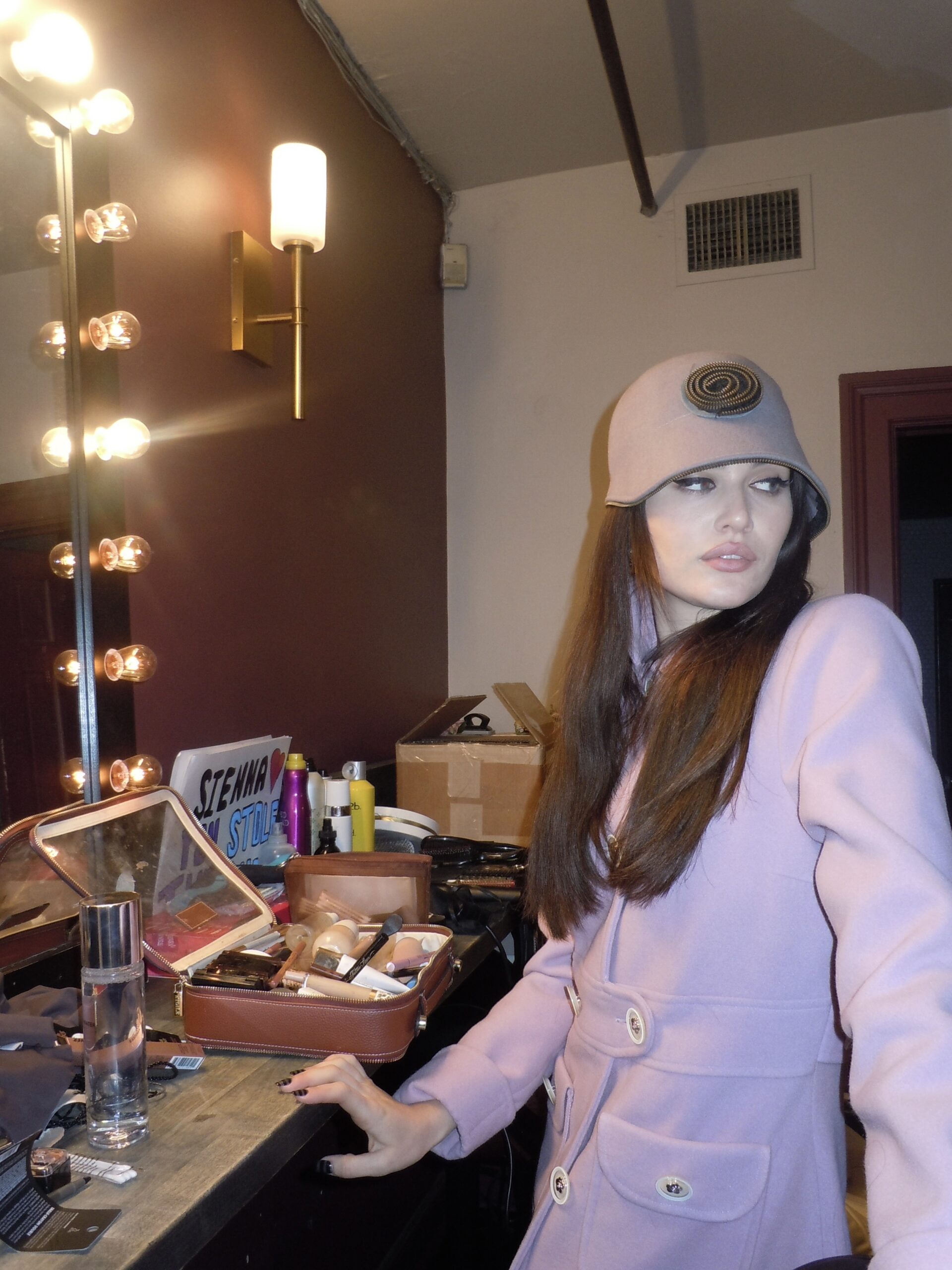
SPIRO: I love the personality and character of the sixties, and how individual it is. It took me a really long time to find my style because I grew up, honestly, hating my body. It took me a while to be comfortable being looked at on stage. But I love the silhouettes from back then and I’ve grown into myself and feel a lot more confident than I used to. Nancy Sinatra, Barbara Streisand, and Francoise Hardy are amazing women who I just admire a lot. And those paper dresses or the little box dresses. I just love that.
RUSSELL: I love the look of a romper with go-go boots back then.
SPIRO: So cute.
RUSSELL: How are you balancing making sure that you’re paying homage to these artists that have inspired you while also putting your own stamp on your identity as an artist?
SPIRO: Well, just listening to music, you’re naturally influenced subconsciously. The way I sing is the main way I pay homage to those artists because that’s how I learned to sing. There’s this famous quote from Frank Sinatra, he said, “A singer, to me, is somebody who tells a story.” I keep that in mind whenever I’m singing and I always try and bring myself back to what I wrote the stories about.
RUSSELL: Yeah.
SPIRO: But my music is, for the most part, pretty stripped back. I love the humanness of music from back then. You couldn’t auto-tune, you couldn’t punch in. I record everything in one take and there’s barely any chop-ins. All the instruments are recorded by people. You hear the little mistakes.
RUSSELL: The cries.
SPIRO: You hear the breaks, you hear rubbing from my dress. That is so personal. The guy I work the most with is Omer [Fedi] and he’s taught the most about singing because I used to do every riff, and every run.
RUSSELL: You’re Christina [Aguilera].
SPIRO: I was trying to prove myself because I actually didn’t think I was a good singer growing up. So every chance I would get to over sing, I would do it. He’s the one who taught me less is more and you can only do what the song wants.
RUSSELL: That way when you really want to do more, it feels like—
SPIRO: A moment.
RUSSELL: Your music is very evocative of sad girl vibes. When I ask this question, I don’t want you to take this in the wrong way.
SPIRO: Don’t worry.
RUSSELL: Do you see yourself writing happy songs in the future?
SPIRO: I have to write wherever I’m living. I’m not sad all the time. I just find it easy to pull from that emotion. It’s a sad set, I’ll be honest with you. I would love to make some upbeat songs.
RUSSELL: When you’re looking out into the crowd and you’re singing, literally pouring your heart out, what is the reaction that you’re typically seeing from the crowd?
SPIRO: It’s all different. I was doing a show in Philadelphia the other day and I saw this girl in the front row crying, and it just looked like she’d been through so much pain. I’ve lived through all these songs, so I know what it feels like. I really love the people in the audience. It’s a very special group of people. There is such a mutual understanding in that crowd, which is so rare.
RUSSELL: You’ve referenced that since you’ve lived what you’re singing, it hits you emotionally. When you’re singing that song night after night, are you reliving that? Or at a certain point, does it become a separate version of yourself?
SPIRO: I used to, and I was like, “This is actually driving me insane.”
RUSSELL: Not healthy.
SPIRO: Because I’d try to take myself back there to get back into the emotion, but I can’t do that.
RUSSELL: You’re going to burn out.
SPIRO: That’s what “You Stole the Show” is about. It’s about living it every night and just imagining what would happen if that person was there.
RUSSELL: I was really excited to talk to you about “The Visitor” because it was something that you dropped because of the high demand of your fans. What is it like to be able to have instant feedback from your fans on TikTok who are like, “We want more of this clip that you released. When’s the full version coming out?”
SPIRO: As cool as that is, it will never dictate what I do. I put that song online because I knew I was putting it out eventually and genuinely it was my favorite song I’ve ever made. Sometimes I just hate the whole waiting thing. I’m quite an authentic person, especially online. I do my own social media, I post what I want, and I just felt like it was the right thing to post at the time.
RUSSELL: The fan response is just a bonus.
SPIRO: Yeah, it’s amazing. Social media is a blessing and a curse at the same time. It has incredible opportunities. But it would be a huge disservice for artists to just focus on that.
RUSSELL: If you start focusing on commercialization, you lose that personal aspect. There are artists who will specifically write songs with the intention of like, “This is going to go viral on TikTok.” And fans will be like, “I can tell that this was written to be a sound.”
SPIRO: To each their own. I personally wouldn’t do it. I think art should just come from humans, and be personal in whatever way that means.
RUSSELL: Even though you’re in your 20s, your lyricism is so poignant and sharp. Were you always a natural talent in that way?
SPIRO: I have to say, my first song, I actually loved. It then went downhill from there for a long time and it stayed down and then I think it got better. [Laughs] It’s been a process. I’ve written hundreds and thousands of songs and most of them are bad.
RUSSELL: The songs that are bad, do you want to go back and see if you can rework them with a new lens?
SPIRO: Depends. I mean, “The Visitor” I wrote nine times and I genuinely have nine finished versions of that song. I believed in it so much and everyone was sick of me. I was like, “Why don’t we try it again?”
RUSSELL: One more go. [Laughs]
SPIRO: Sometimes it works and sometimes you just have to let things go.
RUSSELL: When you’re on tour, there are going to be your diehard fans, and there are also going to be people who aren’t too familiar with your work. What do you want them to leave with after your performances?
SPIRO: I hope they like me. I love when people are like, “I’ve never heard of you before.”
RUSSELL: You hand everyone a survey on their way out. [Laughs]
SPIRO: I’m like, “Have you been here before? No? Well, would you come back?” That’s what I’d like them to leave with, a ticket for another show.
.jpg)
.jpg)
 (1).jpg)
.png)
.png)


Leave a comment